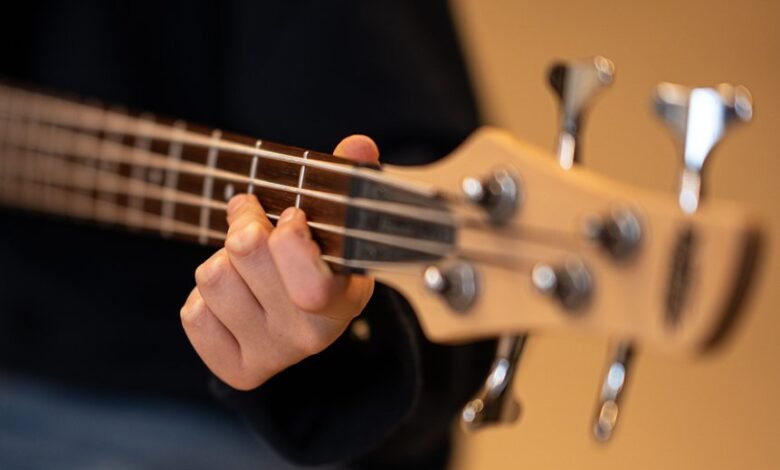
Open E tuning broadens melodic access and enriches harmonic texture, offering a distinct sonic world where drones, open voicings, and triadic/quartal spacing influence phrasing and cadence. The framework supports sustained tonal foundations, brighter upper tones, and drone-driven articulation, enabling cohesive narrative threads. It bridges genres from blues to fingerstyle while demanding precise intonation and deliberate practice. Its practical timbre and dynamic layering invite further exploration, yet the implications for songwriting remain contingent on how these elements are cultivated.
What Open E Tuning Unlocks for Songwriting
Open E tuning, by lowering the strings to E–B–E–G♯–B–E, creates a chordal framework that reshapes melodic access and harmonic texture.
This configuration expands open-e harmony possibilities and supports open e improvisation, enabling succinct melodic ideas and modal exploration.
It guides phrasing choices, informing cadence perception while preserving sonic freedom, thus enhancing thematic development and expressive coherence in songwriting.
Open E Voicings and Drones: Practical Techniques
To harness the sonic potential of open E tuning, practitioners deploy targeted voicings that emphasize drone stability and melodic clarity. Open voicings favor triadic and quartal spacing, while sustained drone textures consolidate tonal foundation. Techniques include deliberate string muting, selective resonance management, and dynamic layering to preserve clarity amid tension, yielding transparent, flexible harmonic palettes suitable for exploratory musical freedom.
Genre-Grain: Blues, Rock, and Fingerstyle in Open E
Blues, rock, and fingerstyle approaches in open E emerge as distinct yet interrelated practices that leverage the tuning’s persistent drone and bright, ringing upper tones. This genre-grain analysis situates open E storytelling within pragmatic textures, illustrating how drone-driven vocabularies shape phrasing, timbre, and articulation.
The open e texture guides compositional sorting, revealing cross-genre affinities and expressive potential.
Getting Started: A Simple Path to Open E Mastery
Navigating Open E mastery begins with a deliberate, incremental approach that foregrounds both tuning awareness and a core repertoire.
The method emphasizes disciplined practice, clear metric goals, and skeptical observation of results rather than rote repetition.
Open e dynamics inform phrasing choices, while drone based progressions establish tonal reference points, enabling precise intonation, resonance, and transferable fingerstyle fluency toward broader sonic freedom.
Frequently Asked Questions
How Does Open E Affect String Tension and Feel?
Open E tension increases overall string pull, altering stability and playability; the high strings feel stiffer while the low strings exhibit pronounced tension. In aggregate, string feel becomes more taut, demanding precise finger pressure adjustments and steadier attack.
Can Open E Transpose Songs To?
Open E can transpose songs via capo or fretboard transposition, though practical limits exist; open e myths and tuning myths obscure accuracy, while analytical methods reveal each piece’s movable tonal centers and relative keys for flexible performance.
What Gear Best Complements Open E Tuning?
Open tuning ergonomics favor light gauge strings and stable neck setup, while tone shaping pedals complement open E by clarifying harmonic overtone structure; the combination yields precise, freedom-oriented timbres and responsive dynamic control for exploratory players.
Are Capo Options Compatible With Open E?
Capo voicing can coexist with Open E; tuning compatibility remains manageable with careful fret placement. The relationship is analytical: capos alter tonal color while preserving essential open strings, enabling flexible voicings without destabilizing the overall tuning framework.
Which Genres Benefit Most From Open E Modal Tones?
Open E modal tones most benefit blues, folk, indie rock, and experimental genres; open tuning relevance lies in timbral variety and harmonic accessibility, while modal tones impact phrasing, pedal points, and resonance, enabling nuanced microtonal expressivity within structured progressions.
Conclusion
Open E tuning, when scrutinized, reveals a reproducible cognitive map: drones sustain tonal gravity while open voicings invite audacious timbral experiments. The scholarly takeaway is not romance but reproducibility—intonation, phrasing, and spacing become measurable variables, not muses. Satirically, one notes guitarists claim “open” but proceed with closed-harmony habits, as if gravity were optional. In practice, Open E offers a disciplined route to cohesive narratives, bridging genres with deliberate timbre and verifiable technique. The argument remains rigorously melodic, not merely atmospheric.